Transport for London (TfL) has unveiled an ambitious five-year strategy designed to tackle congestion, improve safety and modernise how London’s vast road network operates.
Branded “London on the Move”, the plan is the first city-wide highways strategy of its kind, covering every part of London’s road network. It sets out how new technology, expanded bus priority measures and tougher controls on roadworks will be used to keep the capital moving as travel demands continue to grow.
At its core, the strategy is about making London’s streets work better for everyone — cutting delays, improving air quality and ensuring roads are safer and more reliable for buses, cyclists, pedestrians and drivers alike.
A smarter approach to managing London’s roads
London operates one of the busiest and most complex road networks in the world, supporting billions of journeys every year. TfL manages more than 6,400 traffic signal junctions and pedestrian crossings, making the use of technology essential to keeping the system running smoothly.
Under the new plan, TfL will build on London’s reputation as a global leader in traffic management by upgrading systems that control traffic flow, improve safety and support sustainable travel.
A key focus will be buses — one of the most affordable and accessible ways to travel in the capital. Faster, more reliable bus journeys are seen as critical to reducing car use and easing congestion.
Expanding lane rental to cut roadworks disruption
One of the most significant changes is the expansion of TfL’s lane rental scheme. The scheme charges utility companies and contractors for digging up the busiest roads at the busiest times, encouraging work to be completed faster and with less disruption.
Until now, lane rental has applied mainly to TfL’s red routes. The new plan will extend it to borough-managed roads. As of January 2026, Camden, Enfield, Lambeth and Merton have already received approval from the Department for Transport, with a further 22 boroughs working towards applications.
The Government is also in the process of devolving powers to the Mayor of London to approve lane rental schemes directly — a move that would speed up rollout and ensure greater consistency across the capital.
TfL says the scheme has already helped cut congestion, improve journey reliability and enhance air quality, while generating funds for innovative traffic-management solutions.
Technology at the heart of the strategy
A major pillar of the plan is the upgrade of TfL’s FUSION traffic control system, already regarded as one of the most advanced in the world. The enhanced system will process more data and react more quickly to changing conditions, allowing traffic signals to adjust in real time.
TfL estimates the improvements could cut delays by up to 14 per cent and deliver £1 billion in benefits through reduced journey times. The system will also be future-proofed to take advantage of artificial intelligence sensors as they become available.
TfL is also expanding the use of Vivacity AI cameras, which can distinguish between different types of road users — including pedestrians, cyclists, wheelchair users, taxis and heavy goods vehicles. More than 1,000 cameras will feed into a shared data system with London boroughs, helping to improve decisions such as pedestrian crossing times and road layouts.
Faster buses across the capital
Improving bus performance is a major priority. Currently, 2,080 traffic signals are equipped with bus priority technology, allowing signals to change in favour of approaching buses. TfL plans to expand this to all 3,500 signals used by buses by 2030.
For the first time, TfL will also review signal timings across entire bus routes rather than isolated junctions, ensuring buses can move efficiently along whole corridors.
Another initiative, BusSense, brings TfL and boroughs together to better coordinate roadworks on key bus routes. Early trials have delivered a 3.5 per cent improvement in journey times, and TfL plans to roll the programme out to all boroughs by autumn.
Safer streets and more active travel
The strategy also places strong emphasis on safety. TfL will work with boroughs to deliver new road infrastructure to reduce danger and trial emerging technologies such as near-miss detection cameras.
Since 2019, the number of people killed or seriously injured on London’s roads has fallen to its lowest level outside the pandemic years. Over the same period, cycling journeys have increased by 43 per cent, while bus journey times have largely been maintained.
TfL’s five-year plan will align closely with the forthcoming Vision Zero Action Plan 2, reinforcing the goal of eliminating deaths and serious injuries on London’s roads.
Investment in walking and cycling
TfL confirmed £87 million in funding for boroughs this year to improve walking and cycling infrastructure. Subject to future funding, investment over the next three years could help deliver lower speed limits, safer junctions and up to 95km of new cycle routes.
London’s strategic cycle network has more than quadrupled since 2016 and now stretches over 431km. As a result, 29 per cent of Londoners live within 400 metres of a high-quality cycle route.
Making vehicles safer too
Alongside infrastructure changes, TfL continues to push vehicle safety standards. Its world-first Direct Vision Standard has already been credited with saving around six lives a year by reducing blind spots on lorries.
In 2024, requirements were tightened so all heavy goods vehicles over 12 tonnes must meet a three-star safety rating or install additional safety systems to operate in Greater London. TfL’s Safer Junctions programme has also completed upgrades at 46 high-risk junctions across the city.
A long-term vision for London’s roads
TfL says the “London on the Move” strategy is about preparing the capital’s roads for the future — supporting economic growth, improving public health and making everyday journeys safer and more reliable.
With travel demand continuing to rise, the next five years will be critical in ensuring London’s streets can cope — and work better for everyone who uses them.
The Mayor of London, Sadiq Khan, said: "I'm committed to making London's transport network as safe, efficient, and sustainable as possible. Congestion is annoying for everyone, and it costs our economy millions of pounds a year. This innovative new strategy will tackle the causes of congestion head on.
"This bold new approach to managing the capital's streets will ensure they work for everyone: harnessing cutting-edge technology and infrastructure to reduce congestion, keep Londoners safe, and speed up journey times on London's bus network.
"These improvements are vital to achieving my ambition for 80 per cent of journeys to be made by walking, cycling or public transport, as we continue building a greener and better London for everyone."
Carl Eddleston, TfL's Director of Streets and Network Operations, said: "We're determined to ensure London's road network is amongst the best in the world and the new London on the move plan marks a major step forward in how we manage London's streets. By harnessing data, technology and the benefits of new infrastructure, our 2030 vision will see a better, safer street network that is better suited to the needs of Londoners today and tomorrow. We'll continue to work with London's boroughs and our other partners as we work to deliver this plan over the next five years."
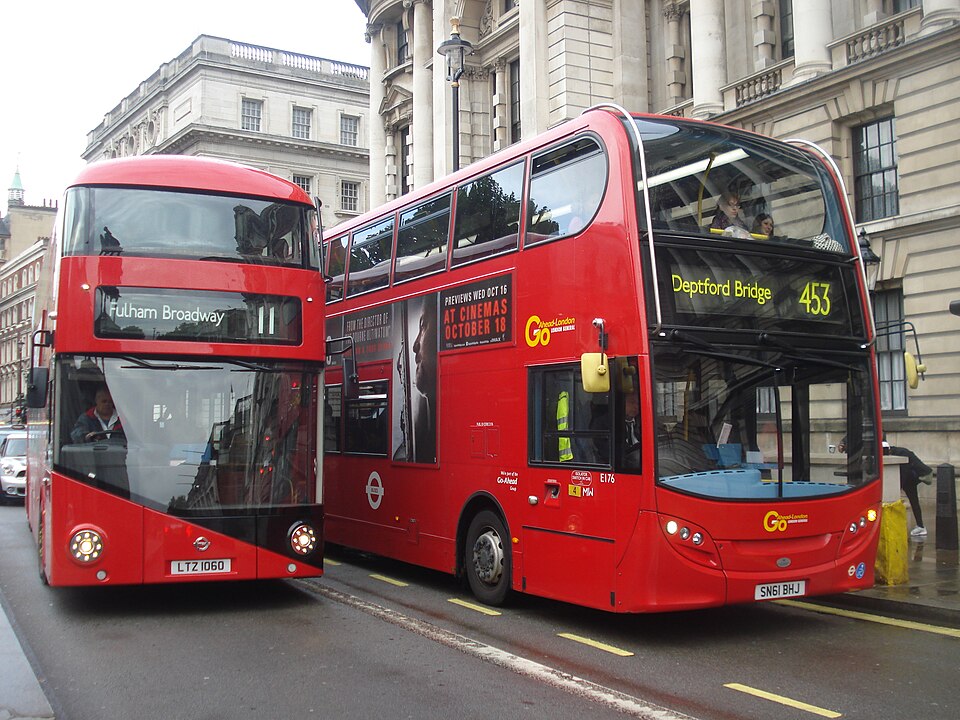
Photo by Au Morandarte from Chiswick/Romford, London, England, Wikimedia commons.