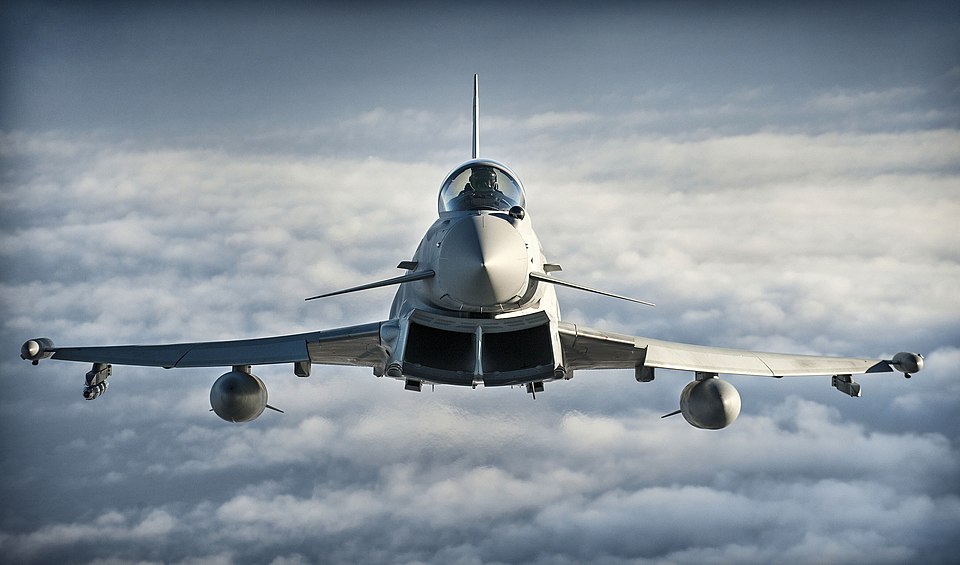
The UK government has unveiled a major defence investment worth more than £650 million to modernise the Royal Air Force’s Typhoon fighter jet fleet, a move set to safeguard over 1,500
skilled jobs across the country while reinforcing Britain’s air defence capabilities.
At the heart of the announcement is a £453 million contract awarded to UK industry for the production of advanced radar systems for the Typhoon aircraft. Defence Secretary John Healey confirmed the deal during a visit to Leonardo UK’s Edinburgh facility, where the cutting-edge radars will be manufactured. The investment is expected to secure hundreds of highly skilled roles in Scotland and up to 1,300 jobs nationwide over the next decade.
The work will be delivered by a consortium including BAE Systems, Leonardo UK and Parker Meggitt, which will install the new radar systems on RAF Typhoons in the coming years. Around 300 specialist jobs will be sustained in Edinburgh, alongside 120 roles in Lancashire and more than 100 in Luton. In total, the wider Typhoon programme supports over 20,000 jobs across 330 companies throughout the UK.
The radar contract follows a separate £205 million agreement announced earlier in the week with defence technology firm QinetiQ. That deal will provide long-term specialist engineering support for the Typhoon fleet, helping to upgrade its weapons systems and ensure the aircraft remains safe and airworthy well into the future. The contract is expected to sustain up to 250 jobs across the UK.
Together, the two investments underline the government’s message that defence spending can act as a powerful engine for economic growth, supporting high-value employment while strengthening national security. Apprentices and highly skilled workers in Scotland stand to benefit in particular, with more than half of Leonardo UK’s nearly 3,000 Edinburgh staff employed in specialist roles such as software, electronics and systems engineering.
The funding will deliver 40 advanced European Common Radar System (ECRS) Mk2 radars for RAF Typhoons, including 38 new systems and upgrades to two test units. Once installed, the radars will allow aircraft to detect, identify and track multiple targets in the air and on the ground simultaneously. They also provide powerful electronic warfare and jamming capabilities, enabling Typhoons to operate effectively in highly contested environments.
The investment forms part of the government’s commitment to the largest sustained increase in UK defence spending since the end of the Cold War, with defence expenditure set to reach 2.6% of GDP from 2027. Upgrading the Typhoon fleet was a key pledge in the Strategic Defence Review, reflecting the aircraft’s role as the backbone of Britain’s combat air power.
Typhoon jets are expected to continue protecting UK skies until at least the 2040s, as the RAF transitions towards next-generation air capabilities. Ministers say the latest announcement also supports the government’s wider “Plan for Change” by investing in working people, creating high-quality jobs and ensuring the UK maintains a technological edge in defence. Photo: Sgt Ralph Merry ABIPP RAF/MOD, Wikimedia commons.