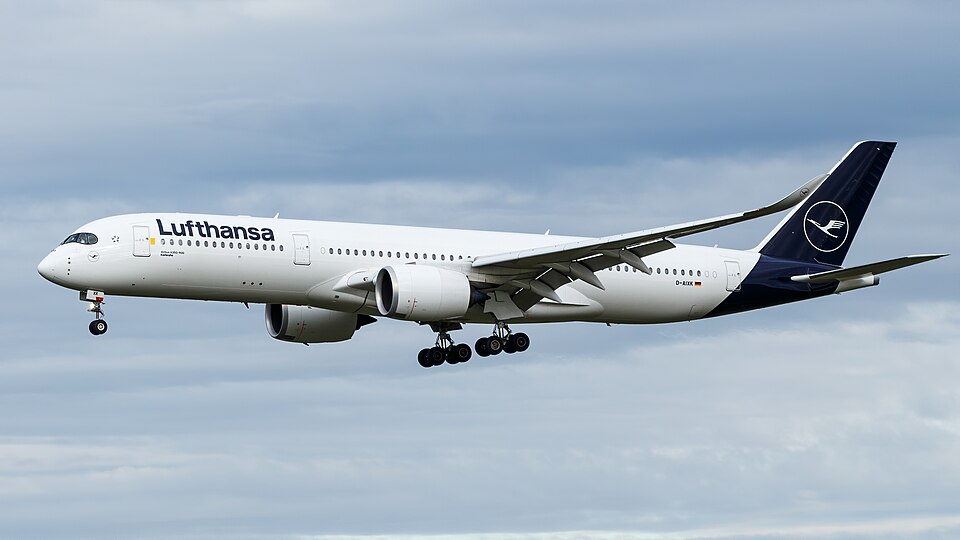
As it marks its 100th anniversary, Germany’s flagship airline Lufthansa is publicly confronting one of the darkest chapters of its history: its deep entanglement with
the Nazi regime.
The move signals a clear break from decades of corporate distancing, during which the company emphasised a legal and organisational divide between its Nazi-era predecessor and the modern airline founded after World War Two.
“We at Lufthansa are proud of what we are today,” chief executive Carsten Spohr said in remarks released on Wednesday. “But ignoring the difficult, dark, terrible years would simply be dishonest.”
The anniversary itself reflects a shift in tone. For years, Lufthansa stressed that today’s Lufthansa AG, established in 1953, was distinct from the original “Deutsche Luft Hansa,” which operated during the Third Reich, was closely aligned with the Nazi state, and was dissolved in 1946. That separation was often used to limit reputational and legal exposure.
Now, the airline is taking a more direct approach to its past.
During the 1930s and 1940s, Lufthansa was effectively a state airline. Members of its management and supervisory boards joined the Nazi Party from 1930 onwards, and the company regularly transported government officials. Its involvement extended far beyond civil aviation: Lufthansa played a significant role in the arms industry and worked closely with the Luftwaffe, the German air force. By 1944, armaments accounted for more than two-thirds of the company’s total revenue.
According to Lufthansa, earlier leaders emphasised the post-war break largely for reasons of liability and image. “Today, we want to take responsibility,” Spohr said.
As part of this reassessment, Lufthansa has commissioned a new book examining its full corporate history. The publication will be distributed to all of the airline’s more than 100,000 employees and accompanied by an exhibition at its new visitor centre.
This is not the company’s first attempt to examine its past. More than 25 years ago, Lufthansa funded historical research into its Nazi-era activities. At the time, however, it stopped short of fully acknowledging findings related to the extensive use of forced labour and the continuity of personnel after the war.
New research presented in the latest publication paints a starker picture. Historian Manfred Grieger, one of the book’s contributors, estimates that more than 12,000 people were exploited in Lufthansa’s armaments production and aircraft repair operations during the war. Only recently has it become clear that those forced labourers included children.
By openly addressing these findings as it celebrates a century of aviation, Lufthansa is attempting to reconcile corporate pride with historical accountability — a balance that many German companies continue to grapple with nearly 80 years after the end of World War Two.