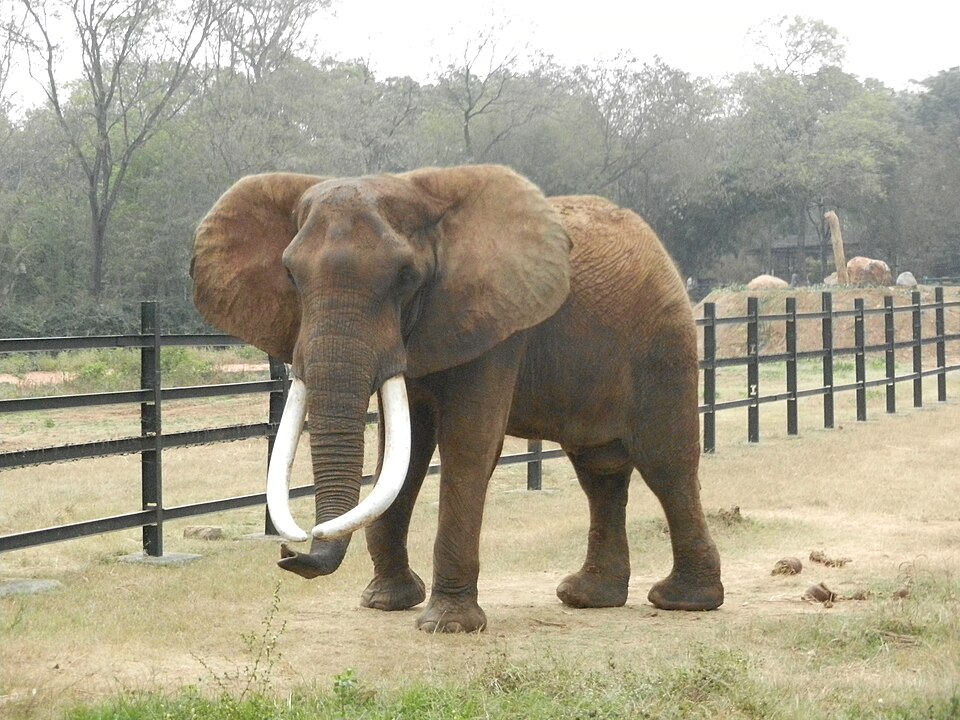
Conservation campaigns aimed at stopping the illegal ivory trade could be far more effective if they focused less on moral condemnation and more on understanding why people buy ivory in
the first place, new research suggests.
Despite decades of awareness efforts and strict international trade bans, ivory consumption continues across parts of Asia. At the recent 20th meeting of the Convention on International Trade in Endangered Species of Wild Fauna and Flora (CITES) in Uzbekistan, the global ban on ivory trade was reaffirmed. Yet researchers argue that legislation and awareness alone are not enough.
A team from the University of York says many anti-ivory campaigns have failed to address the human motivations behind ivory consumption. Instead of changing behaviour, they often rely on messages of guilt, legality or animal welfare—approaches that overlook the deeper social and cultural meanings attached to ivory.
According to the researchers, conservation groups could learn valuable lessons from commercial marketing and public health campaigns, which routinely use behavioural evidence, audience segmentation and impact testing to influence choices at scale.
Beyond right and wrong
One of the studies examined the social, cultural and moral drivers of ivory consumption in China. It found that ivory is frequently associated with social status, respectability and cultural identity, rather than a lack of awareness about elephant poaching or conservation laws.
Lead author Molly Brown, from the University of York’s Leverhulme Centre for Anthropocene Biodiversity, said: “Campaigns are weakened because they focus solely on legality or animal welfare, while ignoring the other social and cultural norms to ivory ownership.
“Ivory buying is about more than just status objects, it is about identity and belonging. If conservation campaigns don’t recognise that, they’ll struggle to actually change consumer behaviour.”
A marketing mindset for conservation
In a second study, researchers reviewed dozens of demand-reduction initiatives worldwide. They found that while many campaigns aim to raise awareness, few make systematic use of social marketing tools, such as behavioural theory, targeted messaging or robust evaluation of outcomes.
Professor Colin Beale, from the University of York’s Department of Biology, said: “Many campaigns are still built on assumptions rather than evidence. They are passionately fought campaigns, but they need to be far more strategic in their execution. They need data and psychology to understand what actually moves people to make a change in their buying behaviours, as well as a system to test if these campaigns work.
“We already know why people buy ivory, so the next step is to design better campaigns that respond intelligently to those reasons. That’s where meaningful change will happen.”
He added that researchers already have a strong understanding of why people buy ivory. The challenge now is turning that knowledge into smarter, more strategic campaigns that directly address those motivations.
Changing habits, not just attitudes
The researchers argue that shifting away from purely moral appeals could help conservation organisations design campaigns that genuinely change habits, not just attitudes.
This approach is particularly important given the ongoing illegal trade in China, where domestic ivory markets were officially banned in 2017. Despite the ban, ivory is still sold through online channels and private networks. Urban, middle-class consumers—who may view ivory as a marker of cultural heritage or social prestige—remain a key audience.
Understanding these consumer groups, and tailoring campaigns to their values and behaviours, is seen as essential for long-term success.
The researchers conclude that combining cultural insight with behavioural evidence could significantly reduce demand for ivory—and potentially for other wildlife products driving species decline worldwide.
The two studies are published open-access in the journals ‘People and Nature’ and ‘Conservation Biology’. Photo by Punithsureshgowda, Wikimedia commons.